



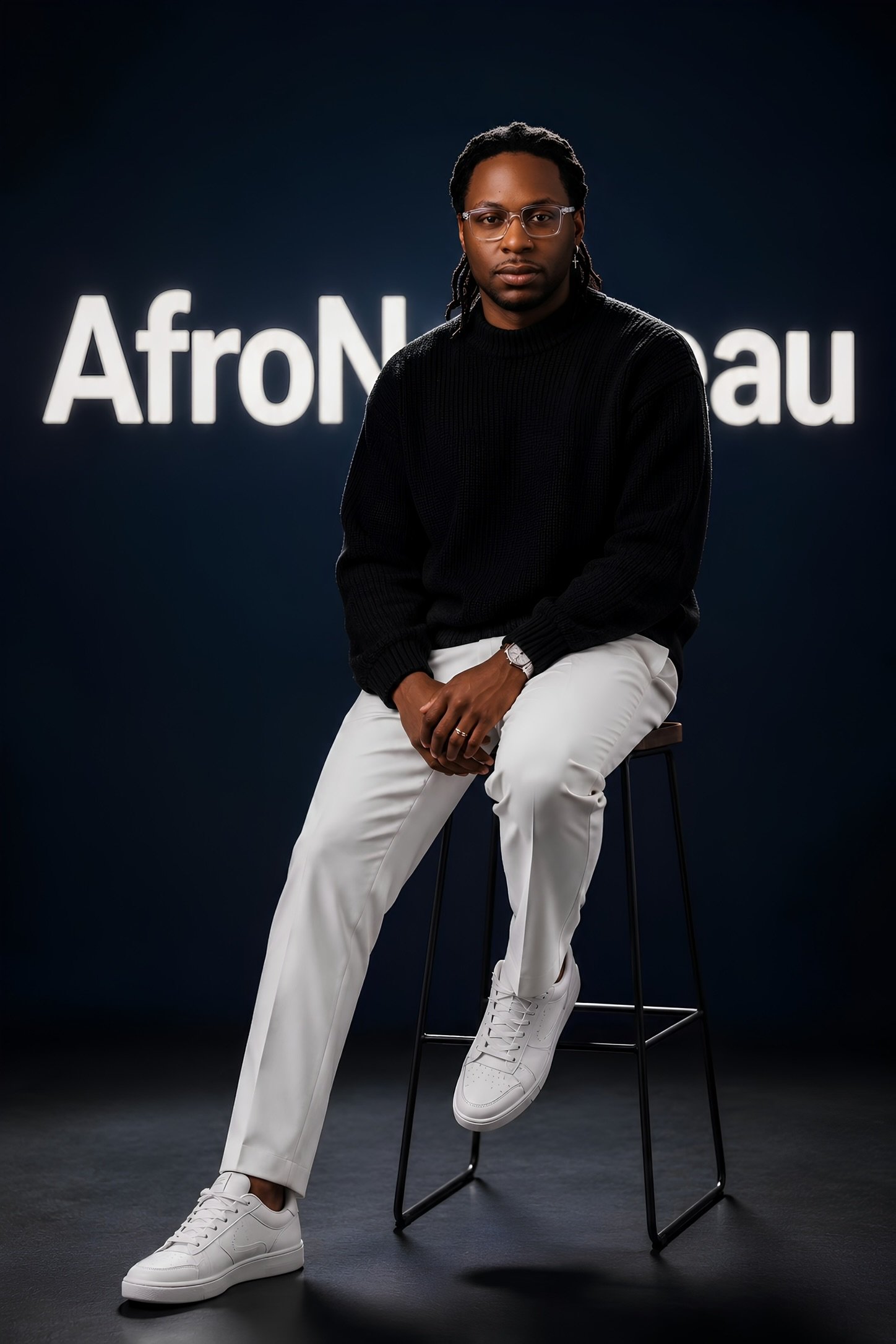
From a Lagos compound to the boardrooms of Atlanta, Collins Ero the founder of TIME AFRICA Network is not chasing visibility. He is building a cultural operating system for a generation AfroNouveau that was told it had too many lanes.
There is a family name in the Benin Kingdom that has carried weight for approximately eight hundred years.
The Ero family of the Benin Kingdom holds hereditary membership in the Uzama N’Ihinron — the seven highest-ranking kingmakers and hereditary leaders in one of West Africa’s most architecturally sophisticated pre-colonial civilizations. Their specific title within that hierarchy: Guardian of the Monarchy. Protectors of the Oba. Administrators of the Urubi Quarter. Present at every coronation. Defenders of the dynasty during its most vulnerable moments.
The title has existed since roughly 1200 AD.
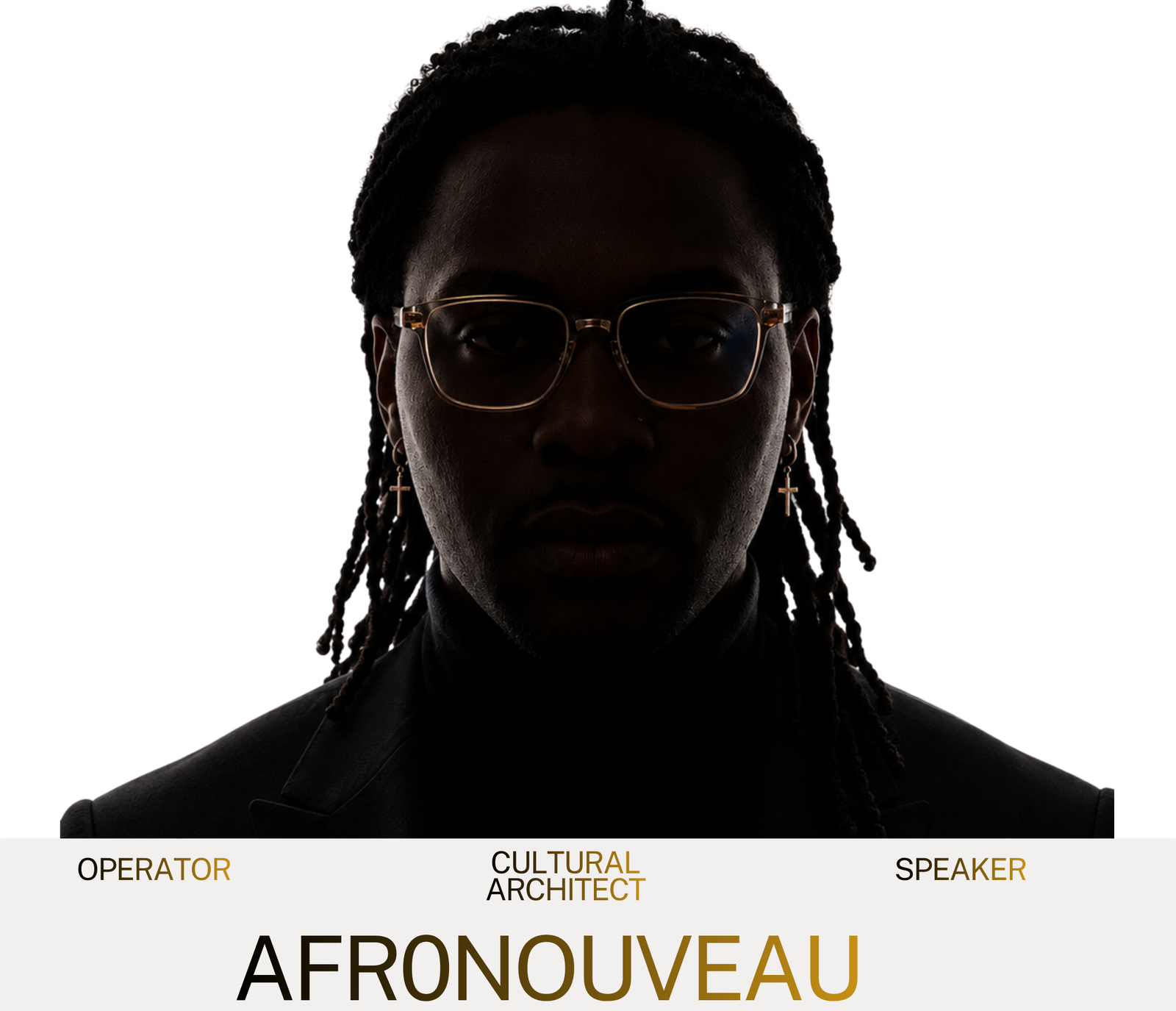
Collins Ero, the Atlanta-based founder of TIME AFRICA Network and creator of the AfroNouveau framework, is the modern iteration of that lineage. He did not choose the guardianship role. He inherited it — and then expanded its jurisdiction.
What his ancestors guarded was a kingdom. What Ero is guarding is harder to geographically contain: the intellectual, cultural, and economic sovereignty of a generation of African and diaspora professionals who have been building at the highest levels of global industry and culture — and receiving, in return, a fraction of the recognition and zero of the infrastructure they deserved.
He is building that infrastructure now. And he is building it with the precision of someone who spent years inside the compliance architecture of one of the world’s largest financial technology firms.
That combination — ancestral guardianship instinct, regulatory precision, cultural depth, and media ambition — is what makes Collins Ero AfroNouveau genuinely difficult to categorize. Which is, as it turns out, precisely the point.
Lagos Made Him. Lagos Taught Him.
Collins Ero was raised in Lagos, Nigeria, the son of a music-loving father and parents who, by his own account, raised their children in moral wealth regardless of material scarcity. Collins grew up in a compound shared by more than fifty tenants, two bathrooms between them. He brought his own chair and desk to school. He dropped out of college three times for lack of funds. In 2001, a landlord removed the roof from his family’s apartment in Lawanson, Surulere while his parents were at work and he and his twin brother were at school.
That twin brother was Chris Ero, known creatively as Xrixtox. For the first chapter of Collins’s life, Chris was his closest intellectual collaborator. Together they navigated Lagos, launched music, and built a shared understanding of the world. The losses that followed — his twin, his sister, his father, all within about a decade — are not buried in Collins’s story. They are foundational to it.
“Sometimes when I seem to forget what I am running for, I simply remind myself what I am running from.”
-Collins Ero
What Lagos gave him alongside the grief was a lens no Western business school curriculum could have produced independently. In a city of more than twenty million — simultaneously Africa’s largest metropolis and one of its most commercially aggressive — Ero absorbed an understanding that culture and commerce are not opposing forces but co-architects. He watched Afrobeats organize itself from neighborhood energy into global infrastructure, participated in the civic architecture of Lagos as a young man, organizing the UNICEF “Say Yes for Children” campaign alongside his twin between 2000 and 2006, serving as Secretary to the Lagos State Child-Technical-Committee Governor’s Office Lagos State AIDS Control Agency LASCA, and co-founding the Deprived Children Movement in 2004 — anchored in the Convention on the Rights of the Child CRC and the UN’s Millennium Development Goals. He had a stint as program coordinator with Toyosi Ogunsiji nee Akerele RISE Networks, one of Nigeria’s foremost social enterprises.
Before he was a founder, he was a systems-change practitioner. That order matters.
The Thesis That Changes the Frame
In 2025, Collins Ero coined a phrase that began traveling across LinkedIn comment threads, keynote Q&A sessions, and private messages from professionals on four continents: The Single-Lane System.
The idea is surgical. The entire architecture of professional life, Ero argues, was built to produce specialists. Pick a title. Declare a major. Choose a track. Stay in it. For a specific category of professional, this is not a discipline strategy. It is a diminishment strategy — applied universally to people for whom range is not a distraction from work but the very source of competitive advantage.
“You were never unfocused,” he says. “The system was built for one-lane people.”
For the AfroNouveau professional — his term for the globally minded, culturally rooted, economically ambitious African and diaspora operator — this pressure compounds. You are already doing the translation work. Converting your name, your background, your cultural reference points into language legible to rooms that were never architecturally designed for your presence. And then, on top of that daily translation labor, the system issues an additional instruction: narrow further.
Ero’s life work is a structured refusal of that instruction. Not a protest. A proof.
The Body of Work
TIME AFRICA Network is the platform. Its founding team reflects the same philosophy as the mission itself: range organized with intention. Kerby Thermidor, Co-Founder and COO, came through Harvard ConnexT. Terry Ferdinand, Co-Founder and Chief Program Officer, is a childhood friend who co-founded the Deprived Children Movement with Ero in Lagos back in 2004 — two decades of trust before the company existed. Dr. Shamila Akabike, Co-Founder and Chief Communication Officer, is a Professor of Media, Public Relations, and Strategic Communications at Howard University, specializing in higher-education analytics. A platform arguing that AfroNouveau narrative deserves institutional precision is strengthened considerably by having an institutional communications scholar in the founding seat.
Their collective mission: to spotlight AfroNouveau trailblazers across the African continent and its diaspora. Not through the soft optics of representation. Through the harder, more durable discipline of narrative infrastructure. The flagship campaign, “I Am AfroNouveau 100,” has drawn responses from Bozoma Saint John, Christine Ntim, and Usain Bolt — figures who recognized in the platform something the standard media category has not yet built adequate language for.
TIME AFRICA operates on a thesis Ero articulates with precision: culture is not decoration. Culture is infrastructure. When culture is organized with business discipline, media precision, and community intent, it stops being content and starts becoming capital. That is the difference between attention and authority. TIME AFRICA is the organizational expression of that belief.
The ALT is the education engine. Designed for the multi-hyphenate operator — the professional carrying range across industries, identities, and skill sets simultaneously — The ALT delivers business education, community architecture, and proprietary frameworks for building at intersections. Its flagship methodology, THE ALT CODE, is a five-move operating framework (Map, Translate, Plug, Move, Compound) that hands operators a practical sequence for converting range into revenue without losing coherence.
BrandoCracy and The AfroNouveau OS A framework
The intellectual property stack extends further. BrandoCracy is Ero’s framework for the shift from institutional brand power to personal brand power — the thesis that the individual has become the primary unit of economic trust in the current era. AfroNouveau OS A framework that transforms globally mobile African talent into what I call Sovereign Talent an operating code for global mobility, not just a self-help method. And Igbonomics is his most historically ambitious project: the formal study of Igbo indigenous commerce as an exportable intellectual framework, the documentation of an entrepreneurial sophistication that predates the corporations that now claim to have invented its principles.
Underneath all of it sits the credential infrastructure that makes Collins Ero genuinely credible in every room he enters. Harvard Business School. MIT Professional Education. Cornell University. CISM certification. PCI DSS, NIST 800-53, SOC 2, HIPAA, GDPR, ISO 27001, and TPRM expertise accumulated during his years as Senior Compliance Analyst at Fiserv and Discover Financial Services. Recording Academy voting member, Grammy U mentor, and in 2023 Team Captain — leading a delegation of music creators to District Advocacy meetings with Congressional Representatives in Atlanta, ForbesBLK. Vogue Club. Nasdaq Entrepreneurial Center Milestone Circles, class 2026, backed by the Wells Fargo Foundation.
These are not vanity affiliations. They are the proof that the range he advocates is the range he personally runs.
Where He Sits in the Cultural Architecture
Comparisons in this category are necessary because category is built partly through contrast.
If Vusi Thembekwayo is Africa’s GaryVee. Aggressive, venture-backed, focused on corporate scaling and traditional entrepreneurship doctrine. Then Collins Ero operates in a register that has a different set of predecessors entirely.
His nearest operational equivalents are Bozoma Saint John, the former Apple and Netflix CMO who spent a career building at the intersection of Black cultural fluency and institutional commercial power. Virgil Abloh, who died at forty-one having proved definitively that range is not the enemy of mastery but its fullest possible expression. And Taiye Selasi, who coined “Afropolitan” and handed a generation the first adequate language for their own transnational, multi-hyphenate identity.
Selasi named the identity. Ero is building the infrastructure.
That distinction is the entire argument. In a world crowded with loud voices constructing personal brands on borrowed time and borrowed aesthetics, Ero is working on something considerably harder and considerably more durable. Personal architecture. Intellectual property with commercial legs. Media that compounds in value rather than decays in relevance. A community built not around a personality but around a philosophy.

“The future does not belong to the loudest voice in the room,” he has written. “It belongs to the clearest system.”
The Stakes Are Generational
AfroNouveau is not a trend. It is the operating thesis for the fastest-growing professional and consumer demographic in the global economy. Africa’s median age is nineteen. Its economy, projected at $29 trillion by 2050, will be shaped by a generation of operators who are simultaneously indigenous and global, culturally specific and commercially sophisticated, rooted and mobile.
That generation does not have adequate infrastructure yet and constantly stifled with AfroNouveau Tax. Not the media infrastructure that tells its stories with precision. They do not the educational infrastructure that hands it operational frameworks calibrated for its specific experience. Not the community infrastructure that connects it across the Atlanta-to-Lagos corridor and the five-city expansion model that follows.
Collins Ero AfroNouveau is building all three. Sequenced deliberately. Authority first, credentialing later. The AfroNouveau Institute — planned as a Year 3 build at TIME AFRICA — will formalize the category at the institutional level, but only after the market has had sufficient time to recognize and validate it organically. He knows the sequence matters. He has watched too many founders mistake the press release for the proof.
The three-engine architecture is clear and intentional. B2B Enterprise now. B2C Operator now. The Institute in Year 3. Each engine funds the next. Each unlocks a dimension of the category that the previous one prepared.
The Line That Carries Everything
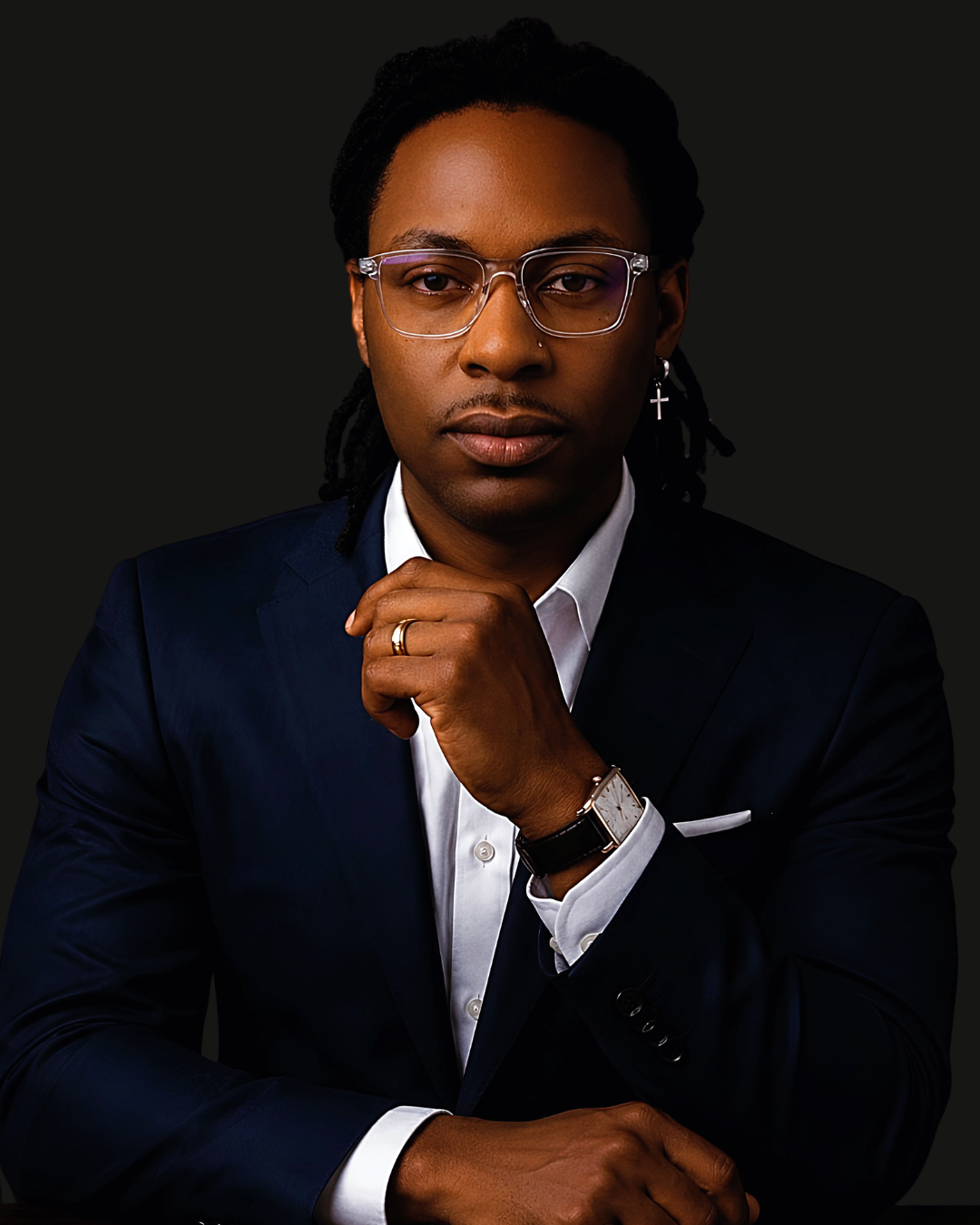
There is a phrase Collins Ero AfroNouveau uses as a carrier line. It functions simultaneously as a personal declaration, a market thesis, and a strategic position for a platform that has not yet reached its ceiling.
Made in Africa. Too global for one lane.
It is four words that contain a century of the argument. The acknowledgment of origin without the apology of limitation. The claim of global belonging without the erasure of cultural specificity. The refusal of the lane without the chaos of no direction.
In a world that still struggles to hold the complexity of what it means to be African and global and ambitious and rooted and technically credentialed and culturally sovereign all at once, Collins Ero AfroNouveau is not asking for permission to be all of those things simultaneously.
He is building the system AfroNoueau OS, that makes the permission unnecessary.
The Guardian of the Monarchy, updated for 2026. The category is AfroNouveau. The architect is already at work.
I AM AFRONOUVEAU.
Collins Ero is the Founder and CEO of TIME AFRICA Network, CEO of The ALT, and creator of the AfroNouveau movement. He publishes The AfroNouveau Brief weekly at Substack. He is based in Atlanta, Georgia.